

New Light Parser, Workflows Revamp, Multi-file Extraction, Open Source Tooling, and more
New Light Parser, Workflows Revamp, Multi-file Extraction, Open Source Tooling, and more

We’ve shipped a lot since our last roundup. July brings improved parsing, more powerful document workflows, new open source developer tools, and improvements across extraction, permissions, and run management:
-
🪶 Parse Light - Our new layout model, and smaller table/form models, are available on a lighter parser engine at a 75% reduction in cost from our Performance mode. Just 0.5 credits/page!
-
🔀 Workflows Validations, Router and Github App — We rebuilt workflow validations and conditional routing from the ground up to handle code execution, semantic guardrails, and more. Workflows also now support native integration with Github for CI/CD.
-
🎆 Multi-file Extraction and Workflows - Extend now supports cross-file extraction, reasoning, and validation via multi-file extractors and workflows.
-
🛠️ Open Source Tooling — Build document experiences with the Extend UI kit and operate Extend from your terminal with the Extend CLI.
-
🔐 Object-Level Permissions — Control who can view and edit any individual resources (extractors, files, folders, etc) across your workspace.
-
And more…
Let’s dive in!
Light Parsing
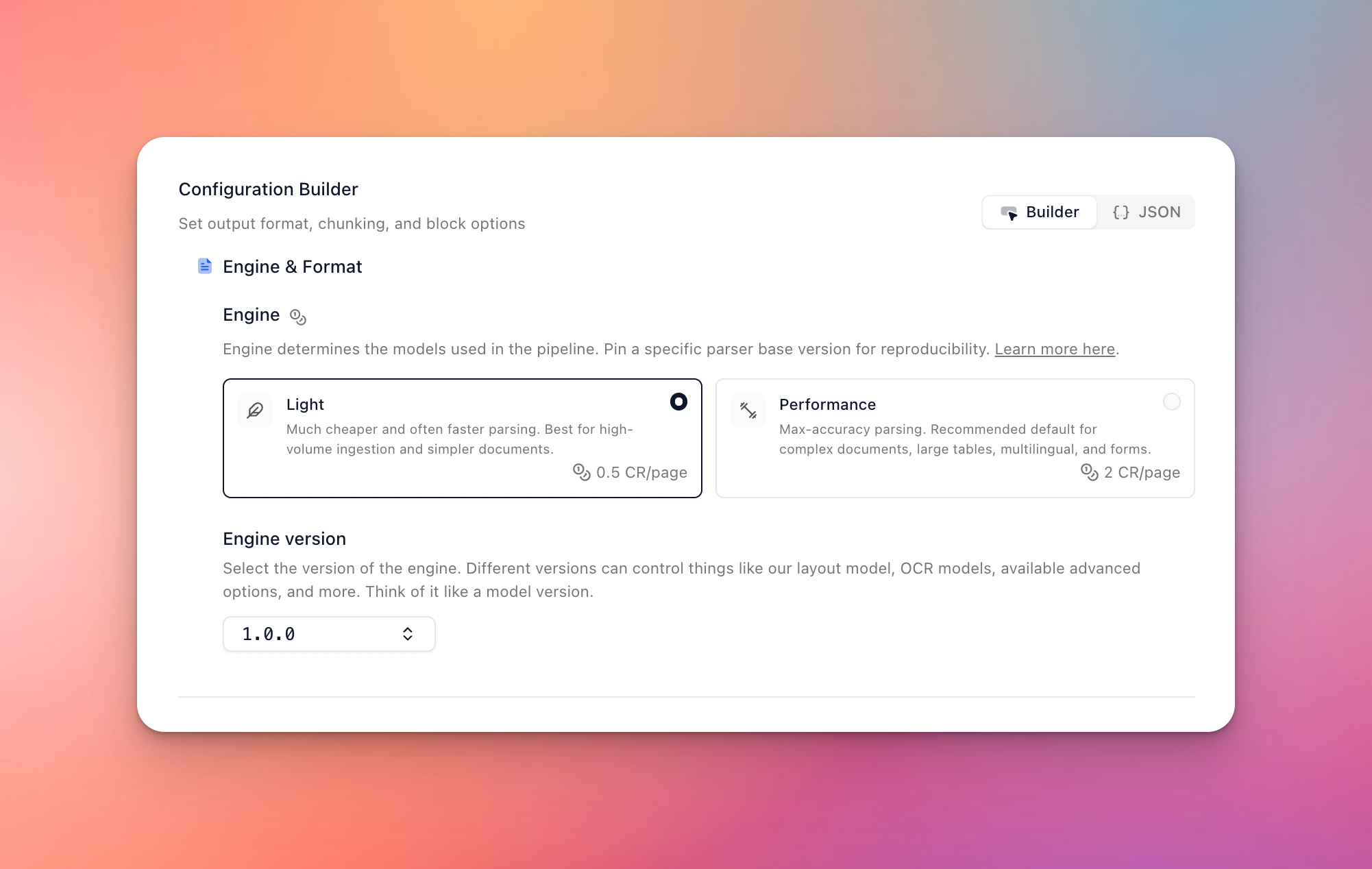
Reduce your parsing costs for high volume, lower complexity use cases by 75% with Parse Light, which runs our state of the art layout model with small, but powerful table and key-value models to get high quality parsing at a fraction of the cost of our Performance mode.
It will struggle more on large/complex tables, dense form regions, and multilingual, but on most use cases our latest Light engine nearly matches Performance for a fraction of the cost.
It’s perfect for high volume parsing use cases where cost is a huge concern!
Toggle on in Extend Studio, or set the engine parameter to parse_light when calling the API.
Workflows V2
We made a bunch of major upgrades to our Workflows product in recent weeks:
Validation and Routing
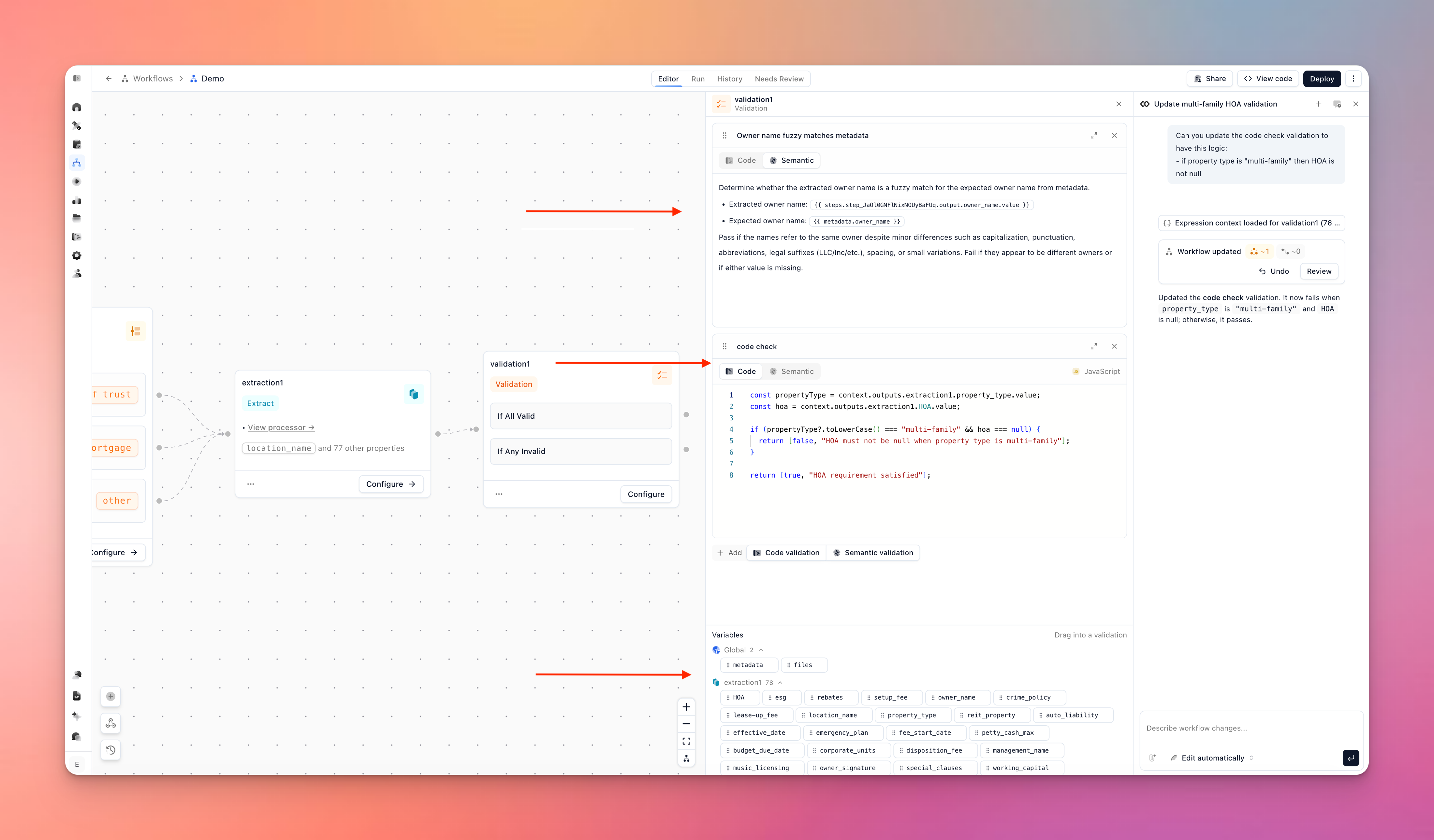
Build powerful, cross-step and cross-document validation and routing logic with our new and improved steps, which replace our legacy expression language with two modes: Code and Semantic.
Github App for CI/CD Integration
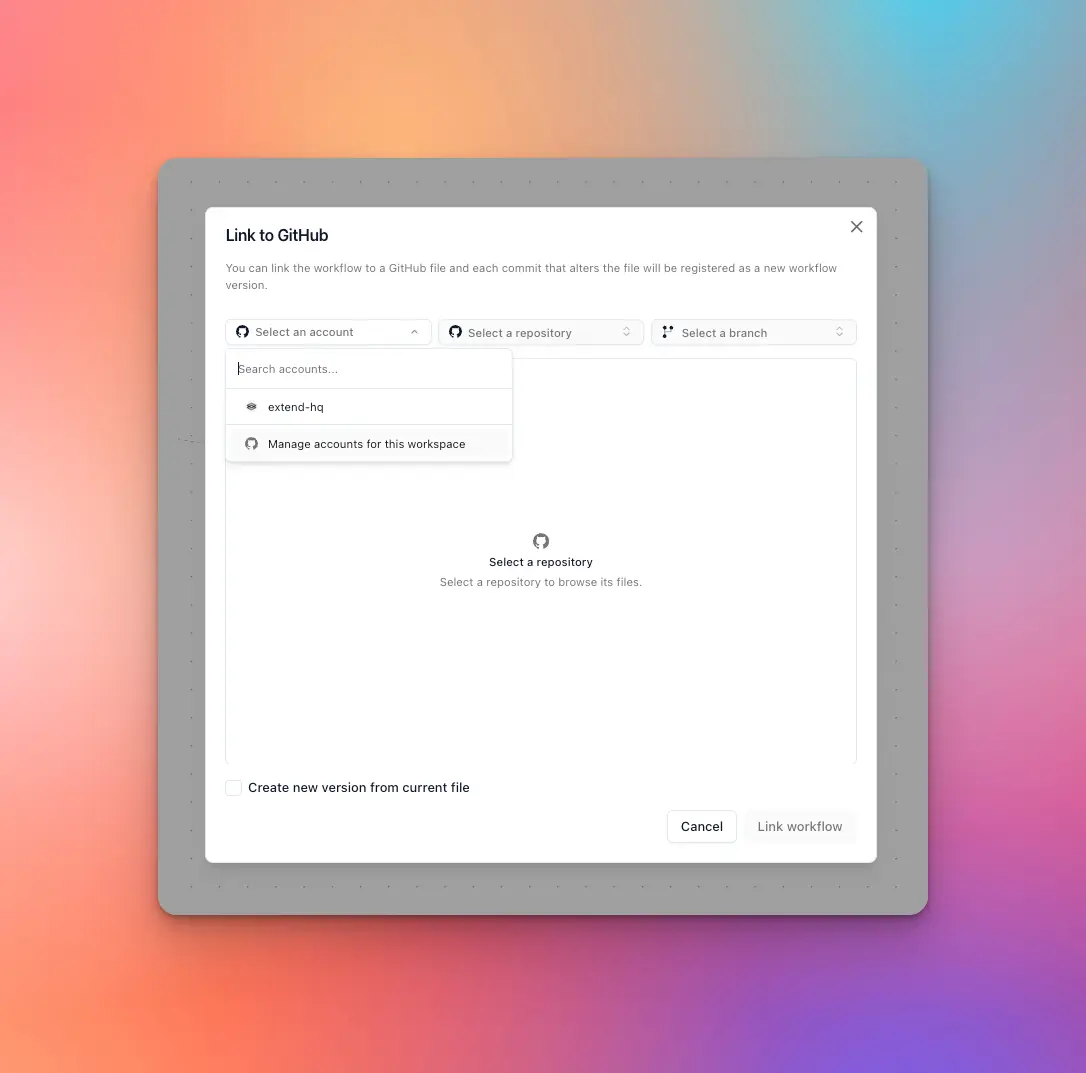
All workflows can be exported to JSON or YAML definitions that you can commit to your codebase for version control and coding agent-based creation/modification.
To make it even easier and safer to roll out changes, you can now use our Github Ap to connect Extend to your Github repository and automatically deploy changes to your workflows when you push to main.
Full documentation can be found here.
Composer Chat
Use Composer to build and modify your entire workflow, and generate and edit any validations or routing logic you need.
Multi-file Extraction and Workflows
For use cases where you need to process a set of related documents together, we’ve added multi-file support to extractors, whether called directly or via a workflow.
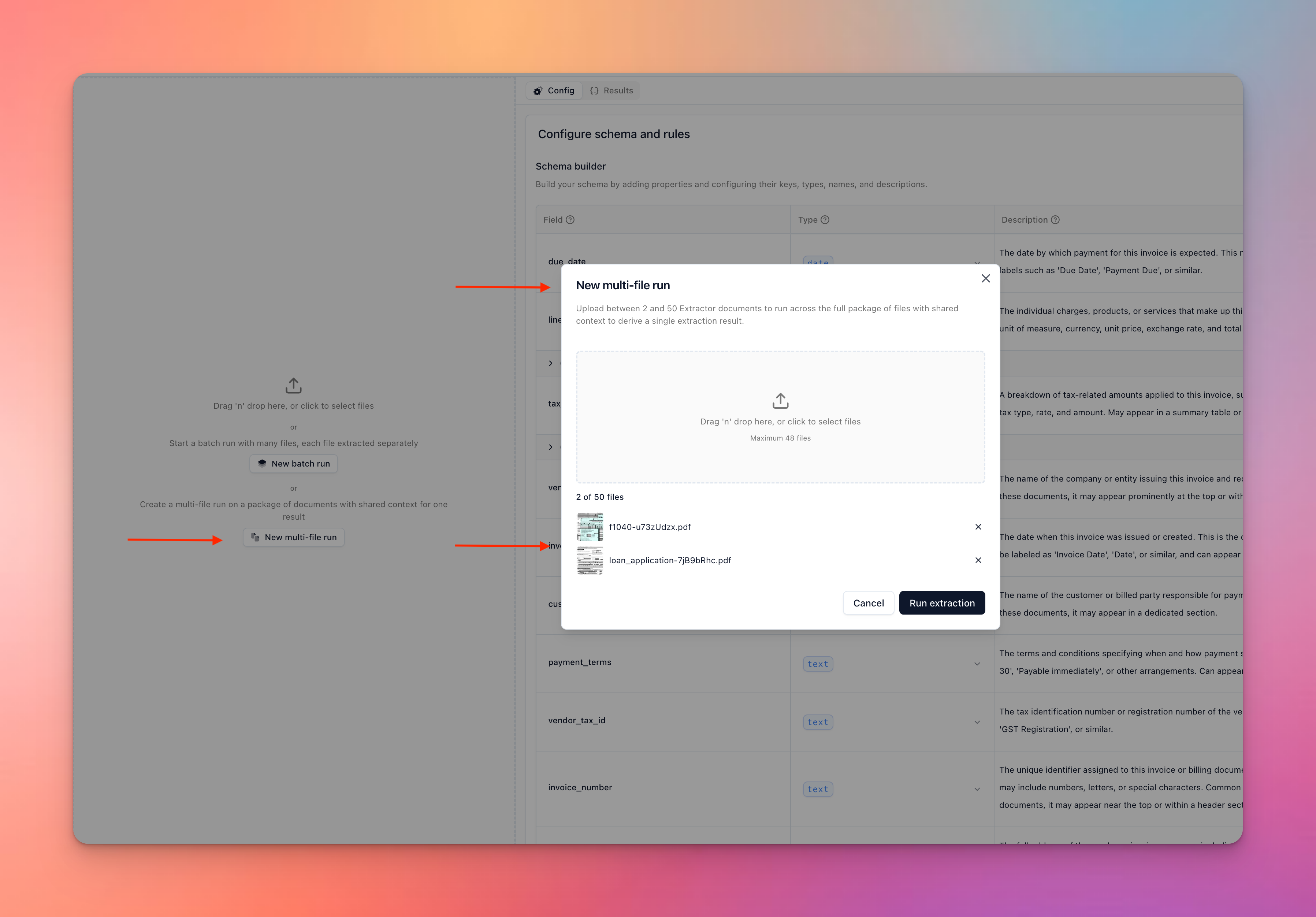
In Studio, you can select the “Multi-file” option when running an extractor, and then select the files you want to process. Via the API, just use the package input instead of the file input — on Create Extract Run to run a single extractor over the set, or on Run Workflow to run a whole pipeline over it.
When receiving a package of files, Extend will automatically parse every file, reason over each one and as a set, then extract into a single result according to your schema.
Open Source Tooling
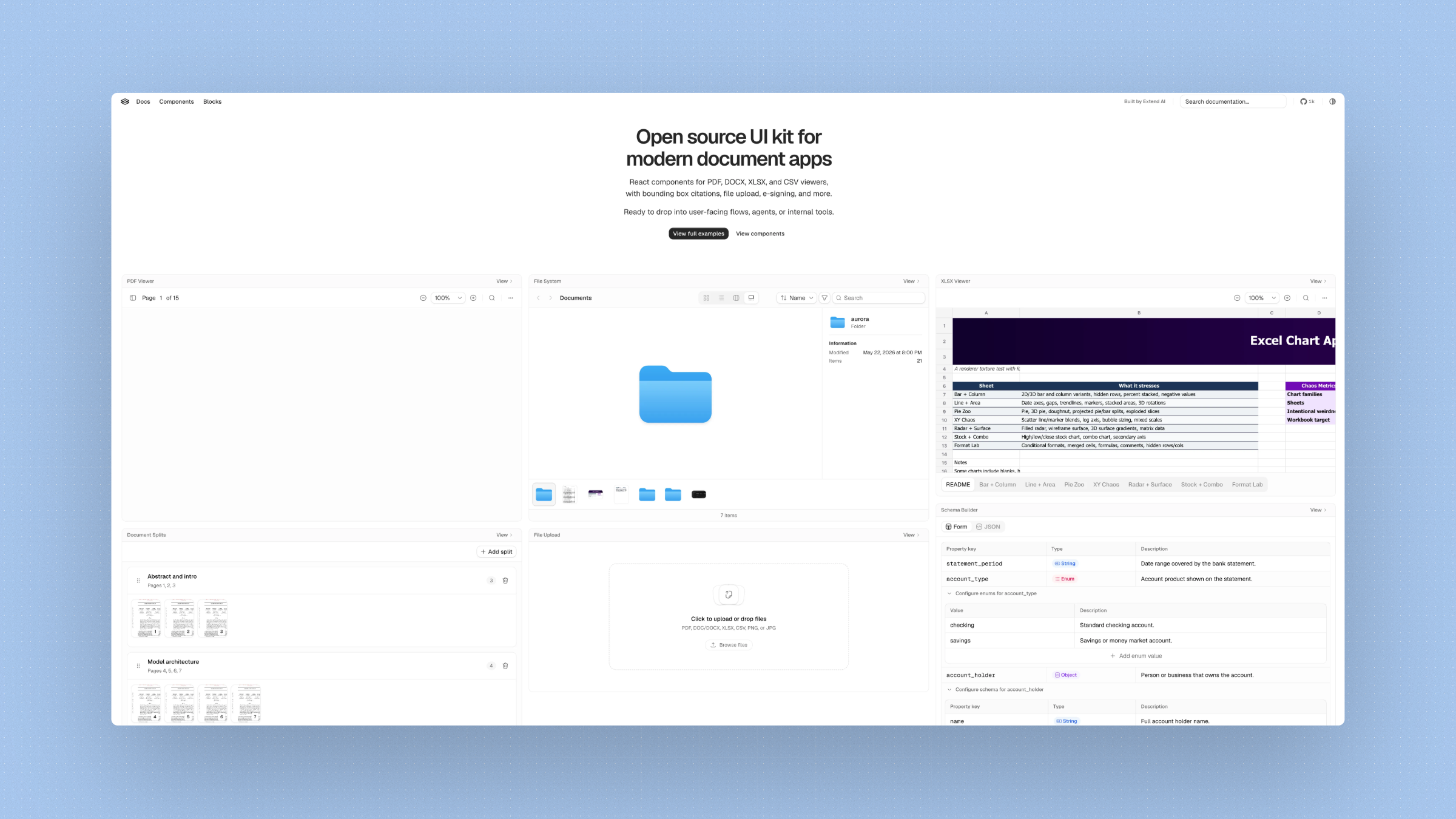
Extend UI
Extend UI is a collection of customizable React components for many of the document UI primitives we built for Extend Studio. It currently includes 15 components, including:
- Viewers and editors for PDF, DOCX, XLSX, CSV, and TSV files
- File upload and thumbnail components
- A bounding-box citation viewer for reviewing extracted text with precise source tracing
- A file-system view for browsing packet files, folders, and document previews
Extend UI is distributed as a shadcn registry, so you can add individual components directly to your codebase and customize them as needed.
Extend CLI
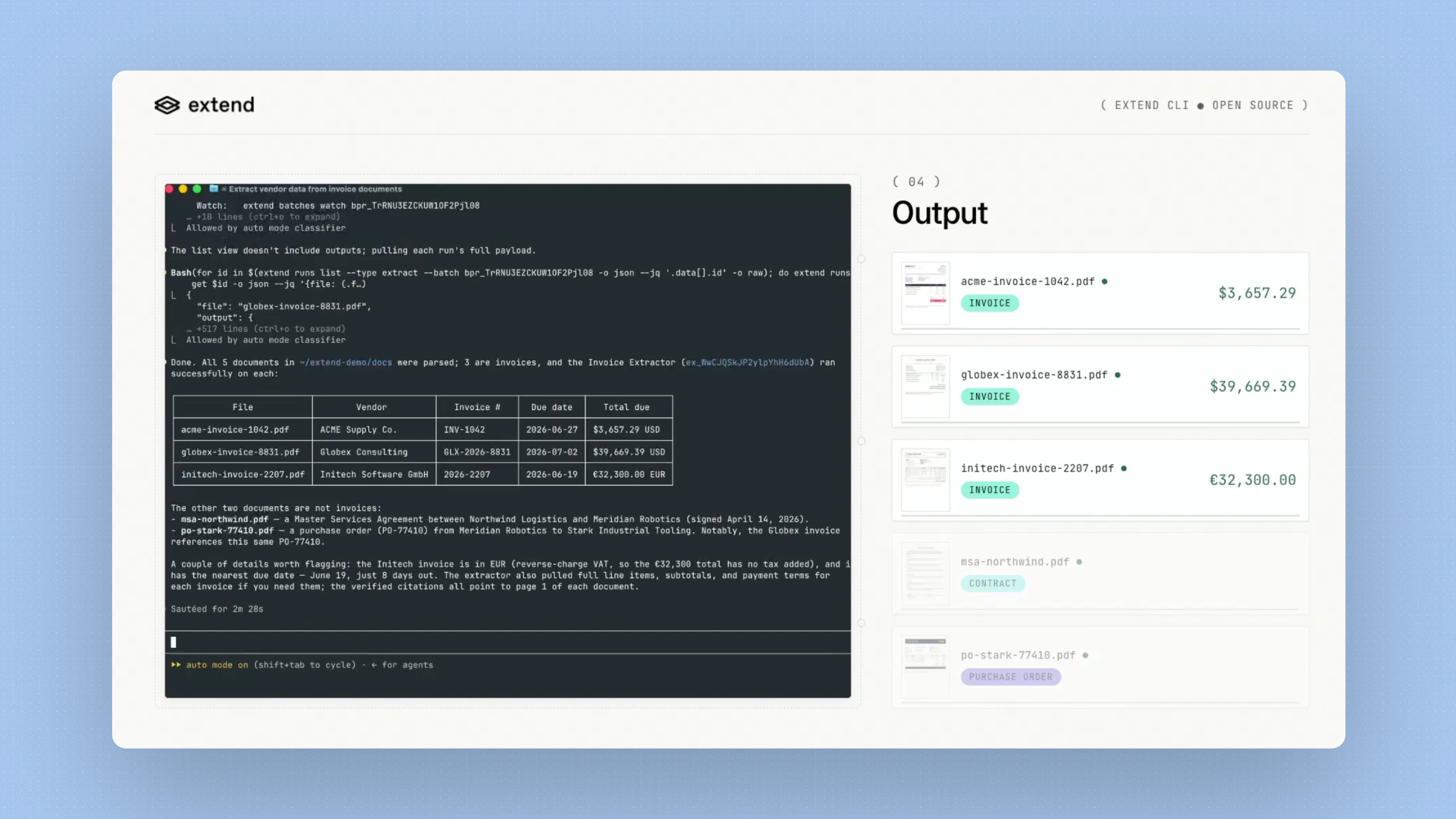
The new Extend CLI lets agents interact programmatically with Extend and gives developers a fast way to test document workflows locally.
- Includes an agent skill that teaches Claude Code, Codex, Cursor, and other coding agents how to use Extend
- Supports parse, extract, classify, split, edit, and workflow operations
- Manages the resources behind runs and lets you create extractors without leaving the terminal
Go SDK
The new Go SDK makes it easy to call the Extend API from Go services:
Object-Level Permissions
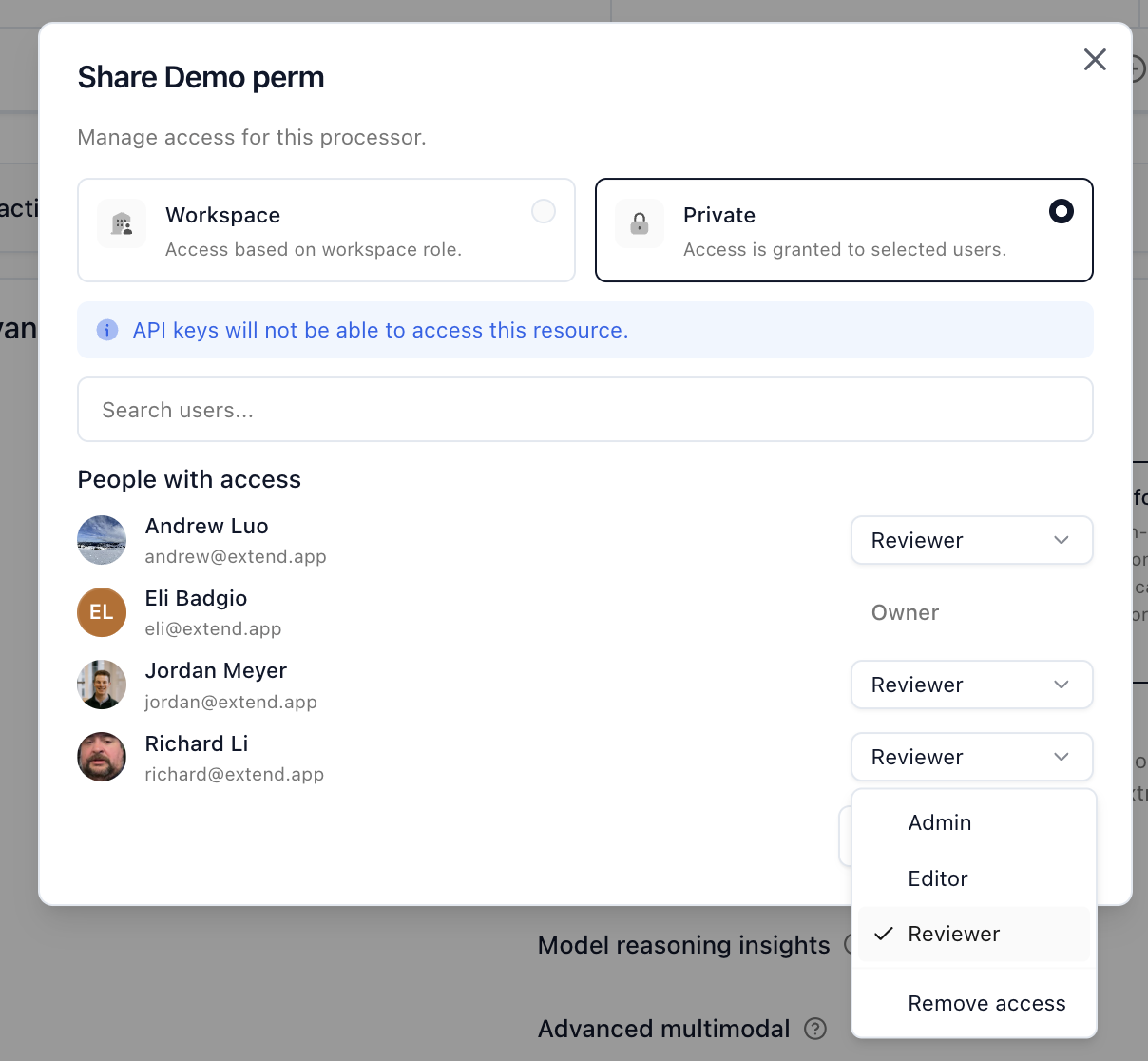
New object-level permissions give you more control over who can view and edit individual eval sets, workflows, processors, files, and runs. This is especially useful for organizations with multiple teams that need to keep data access scoped appropriately but within a single workspace.
Object-level permissions are available on Growth and Enterprise plans.
API based access to private resources via user-scoped API keys is coming soon!
Extraction Improvements
Generate or Infer Extraction Schemas
There are now two faster ways to get started with extraction:
- Generate an extractor schema from example files by passing
generatetoPOST /extractors. You can optionally create or update an extractor as part of the request. - Infer a schema at runtime from a file, configuration, and optional instructions, allowing you to run extraction without defining a schema first.
Improved Array Extraction
Extraction version 4.8.1 includes model upgrades and significant improvements for complex array extraction across logical page, table, and section boundaries when using our MAX array mode:
More Precise Citations
Extraction citations now support more granular bounding boxes at the line, word, or block level, making it easier to trace extracted values back to their source.
Significant improvements to citation accuracy on latest extraction versions for array item/property level citations.
Current-Date Injection
Extractors can now inject the current date into the prompt, improving support for relative date fields and other date-sensitive logic.
Parse Improvements
Custom Figure Parsing Prompts
Customize vision-model prompts for figure parsing to improve output for your use case, such as preserving domain-specific terminology in diagram descriptions.
Simply set the customInstructions parameter when calling the Parse API.
OCR Word Confidence
Parse results now include minimum and average OCR confidence on returned blocks and chunks, giving you more information for downstream quality checks.
EML-to-PDF Conversion
You can now convert EML files to PDF before parsing to improve email parsing outcomes with embedded file attachments.
Cancel In-Flight Parse Runs
You can now easily cancel parse runs that are still processing.
Cost and Run Management
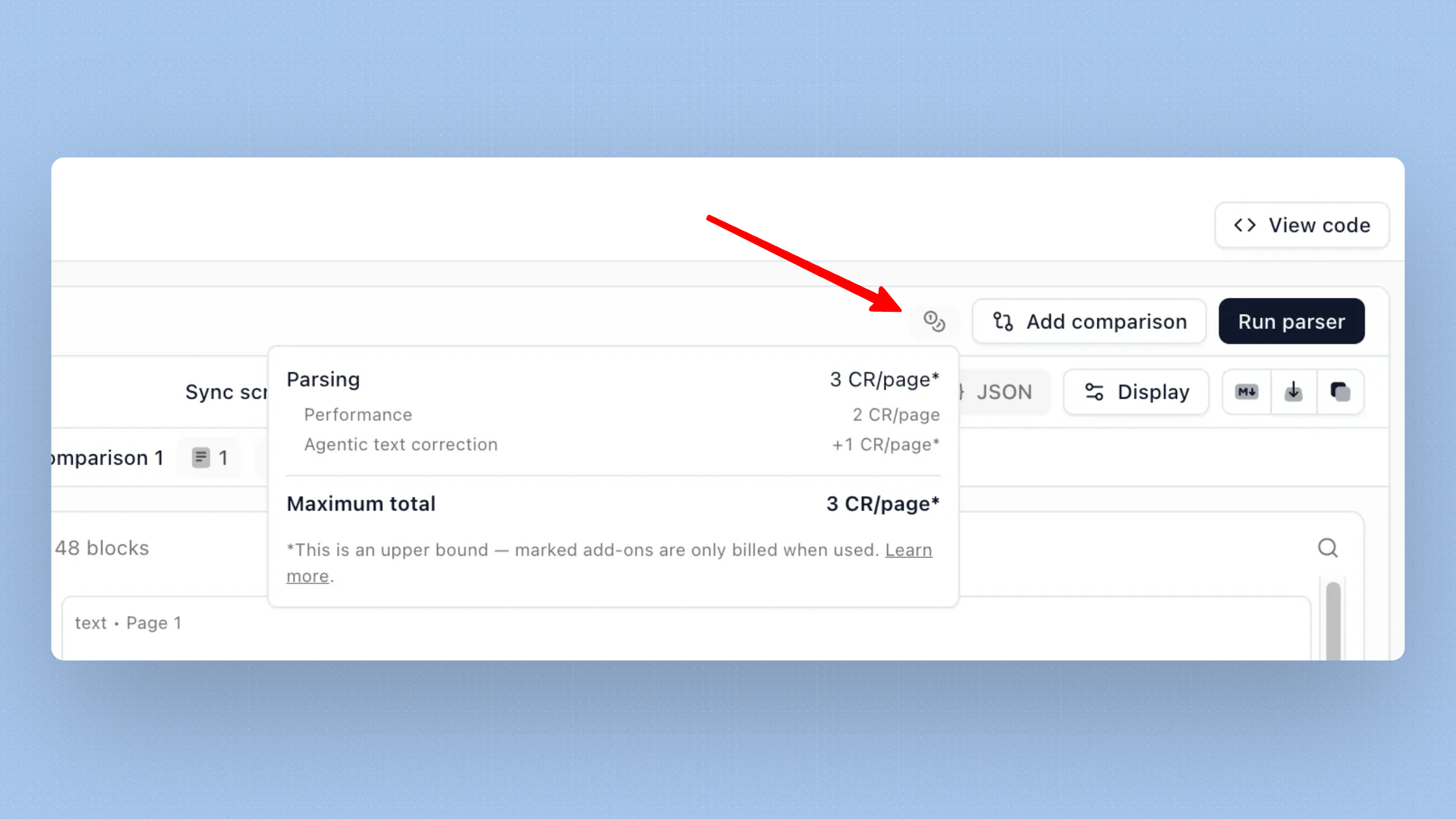
Processor Cost Preview
Processor cost previews show estimated credit costs and their drivers before a run. Run API responses also include a more detailed credit breakdown across processors, agents, and page-specific configurations.
Improved Run Filters
The Runs table now has separate tabs for Parse, Processor, Edit, and Workflow runs, each with run-specific filters and column layouts.